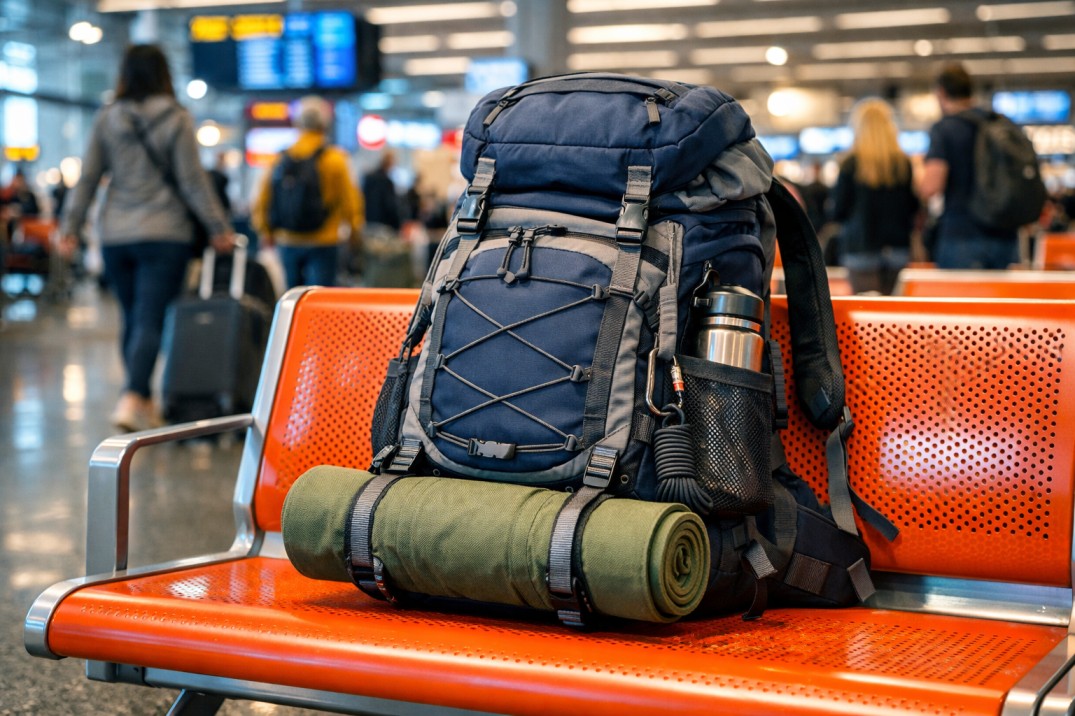
There is nothing quite like the sudden spike of adrenaline you feel when stepping up to an airport check-in counter, watching the digital scale climb, and praying it stops before hitting the magic number.
In recent years, airlines have transformed baggage into a multi-billion-dollar profit center. Major US legacy carriers (like American, Delta, and United) raised their standard checked bag fees to $45 each way for domestic flights. Meanwhile, European budget giants have turned "unbundling"—the practice of stripping away everything from your ticket except the actual seat—into a science.
If you are flying across the US or Europe, navigating these shifting regulations can feel like a maze. Here is a practical breakdown of how these rules work and exactly how to beat the system.
1. The Tale of Two Transatlantic Markets: US vs. Europe
Baggage cultures differ significantly depending on which side of the Atlantic you are flying.
The US Landscape: The "Basic Economy" Trap
In the United States, major airlines use "Basic Economy" tiers to compete with ultra-low-cost carriers. The trap? On airlines like United and JetBlue, a Basic Economy ticket completely excludes a standard overhead carry-on bag—you are only allowed a small personal item that fits under the seat. If you show up at the gate with a roller bag on a United Basic Economy ticket, they will force you to check it and slap you with a $65 gate-handling fee.
The European Landscape: Stricter Weights, Big Changes Coming
European carriers like Ryanair, easyJet, and Wizz Air are notorious for measuring carry-on bags down to the millimeter. They also strictly enforce weight limits on carry-ons—often restricting you to just 7 kg to 10 kg (15–22 lbs).
However, there is a massive shift on the horizon. The European Union has reached a provisional agreement to standardize cabin baggage rules, guaranteeing two free bags on board (one personal item and one overhead cabin bag up to 7 kg) for all flights departing EU airports. While this formal rule is expected to roll out fully in 2027, for summer 2026 travel, you still need to pay close attention to individual budget airline restrictions.
2. Master the Rules Before You Pack
To avoid fees, you have to play by the numbers. While exact measurements vary slightly by airline, these standard benchmarks keep you safe across the US and Europe:
| Bag Type | Standard US Limits | Standard European Limits |
| Personal Item | Must fit under the seat (approx. 18 x 14 x 8 inches) | Must fit under the seat (approx. 40 x 30 x 15 cm) |
| Overhead Carry-On | Max 22 x 14 x 9 inches (usually no weight limit) | Max 55 x 40 x 20 cm (strictly enforced 7–10 kg limit) |
| Checked Bag | Max 50 lbs (23 kg) & 62 linear inches | Max 50 lbs (23 kg) & 158 linear cm |
What are linear inches/centimeters? It is simply the total sum of your bag's exterior dimensions: Length + Width + Height (including wheels and handles).
3. Top Strategies to Avoid Baggage Fees Entirely
You do not need to wear all your clothes at once to beat the airlines. Try these tested strategies instead:
Strategy A: Use the "Pre-Buy" Lifeline
If you know you cannot avoid checking a bag, never pay for it at the airport counter. Walk-up rates are deliberately inflated to punish last-minute decisions. Buying your checked bag allowance online through the airline’s app during booking, or even up to a few hours before the flight, can save you 30% to 50% compared to airport rates.
Strategy B: Lean on the Right Credit Cards or Elite Status
In the US, airline co-branded credit cards are the easiest shortcut to free luggage. Cards like the Chase United Explorer or Citi AAdvantage waive the first checked bag fee for you and your companions on the same reservation. Similarly, hitting the lowest elite tier on almost any major alliance (like Star Alliance Silver or Oneworld Ruby) instantly grants a free checked bag allowance.
Strategy C: Invest in a Cheap Luggage Scale
Guessing the weight of your bag by lifting it is a recipe for a $100 overweight surcharge at the gate. A cheap, portable digital luggage scale costs less than $15 and fits easily into a side pocket. Weigh your bag at home and again before your return flight to ensure souvenirs haven't pushed you over the 50 lb (23 kg) limit.
Strategy D: The "Heavy Wear" Hack
The airline weighs your bags, but they don't weigh you. On travel days, wear your heaviest, bulkiest items on the plane. Put on your heavy boots, coat, and chunkiest sweater for the boarding process. You can always take them off and place them under the seat or in the overhead bin once you are safely onboard.
Strategy E: Compress Your Clothes
Investing in a set of compression packing cubes can reduce the physical volume of your clothing by up to 40%. They don't make the bag lighter, but they easily allow you to downsize from a bulky checked suitcase to a sleek, overhead-friendly carry-on.
Final Thoughts
The secret to avoiding airline baggage fees comes down to a single word: Transparency. Read the fine print on your specific fare tier before hitting "purchase." By knowing your limits, weighing your gear at home, and strategically leveraging carry-on allowances, you can keep your travel budget focused on the destination, not the transit.
For a quick visual breakdown of these strategies, watch this helpful video on Avoiding Excess Baggage Fees on International Flights. It offers practical tips on weight distribution and the financial benefit of purchasing baggage allowances in advance.